Our Projects
OSIRIS/Bee4Future Project
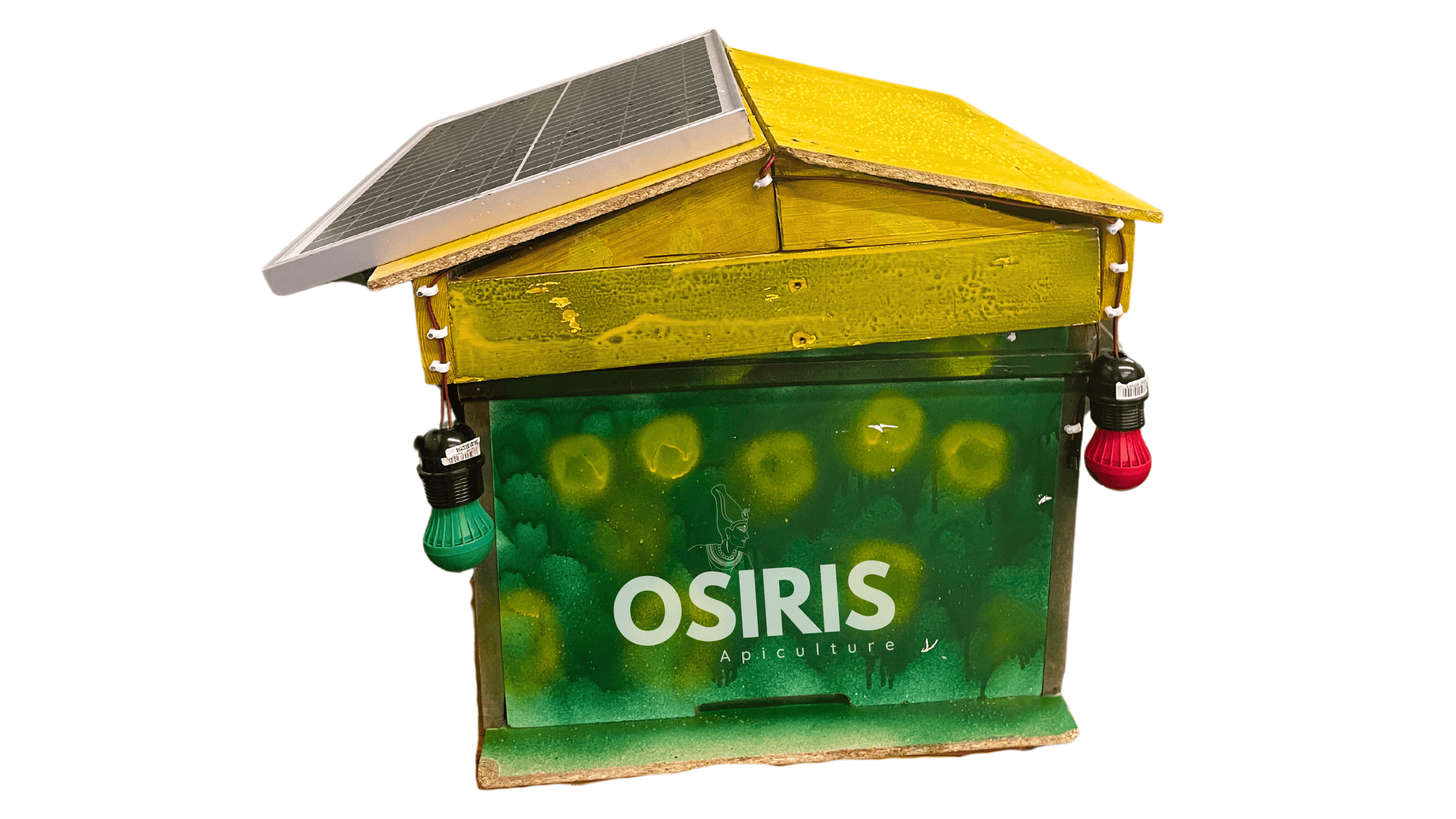
Artemis Africa has developed one of the first connected beekeeping initiatives in the Democratic Republic of Congo and Central Africa. Our OSIRIS/Bee4Future project combines technological innovation with community development to create sustainable economic alternatives to forest-destructive activities.
Our Approach: We deploy connected hives equipped with IoT (Internet of Things) sensors that allow real-time remote monitoring of temperature, humidity, and bee colony activity. This technology optimizes honey production while reducing human intervention. Simultaneously, we train local communities and Batwa indigenous peoples in modern, sustainable beekeeping techniques, providing them with beekeeping equipment adapted to forest and savanna environments.
Intervention Areas: The project operates around Kahuzi-Biega National Park (DRC) and Akagera National Park (Rwanda), as well as in urban Bukavu, contributing to the city’s greening initiatives through rooftop hive installations.
Impact: By increasing household income through the production and sale of high-quality honey, we reduce communities’ dependence on protected area resources, including illegal logging and poaching. The project also incorporates inclusive economic models (installment payments, hive sharing) that enable youth and low-income households to access this income-generating activity.
Balls of Clay Project
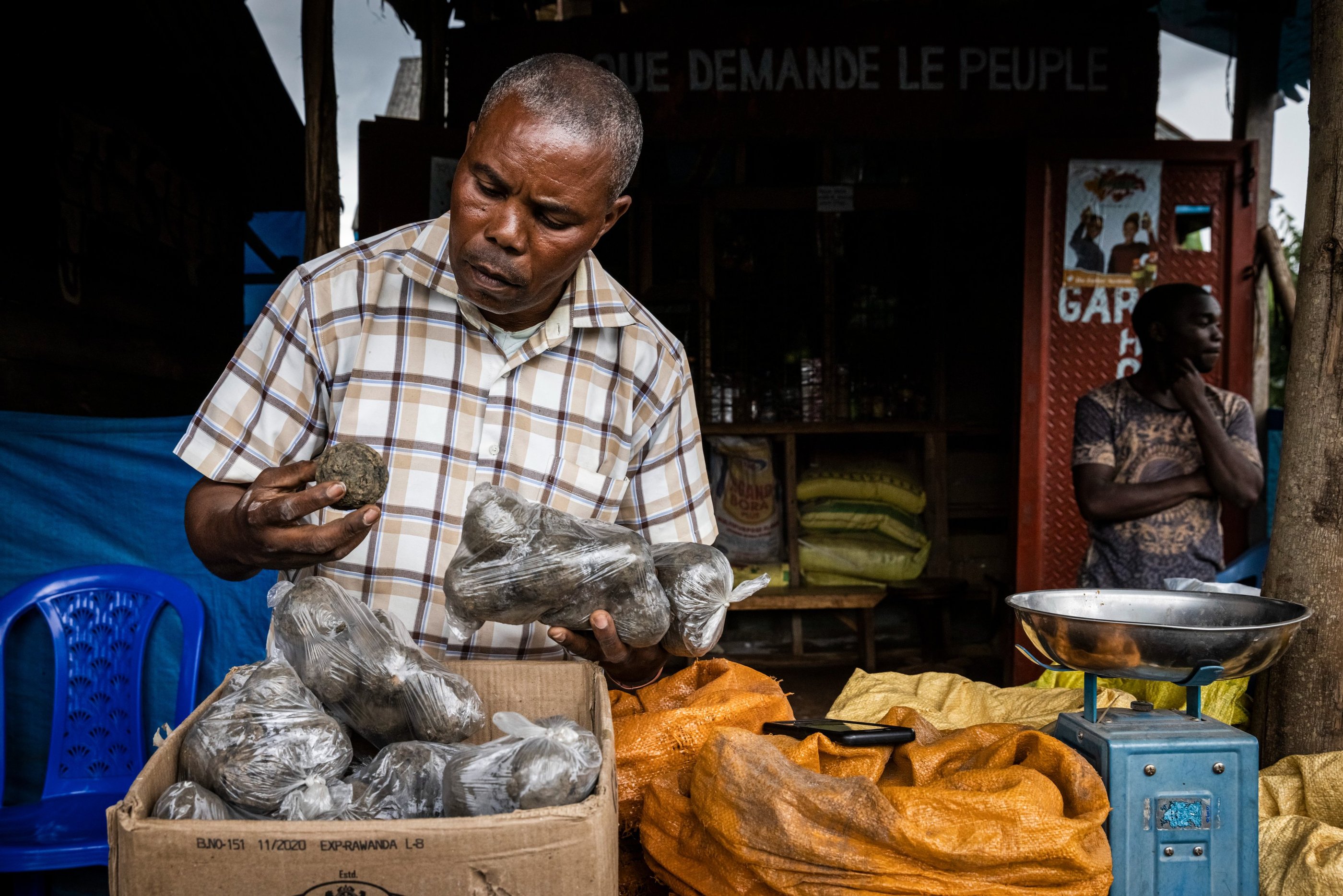
The Balls of Clay project represents a simple yet powerful technological innovation to combat massive deforestation caused by charcoal production and use in the Kivu provinces. This initiative specifically targets vulnerable communities, displaced persons, and war refugees who heavily rely on charcoal from Virunga and Kahuzi-Biega National Parks.
The Technology: Combustible clay balls are made from local clay, water, and organic waste, three readily available resources. When used with improved high-efficiency stoves, this technology can reduce charcoal consumption by 70–80%. A family can save up to one-third of its fuel expenses while contributing to forest preservation.
Our Training Approach: Between 2021 and 2024, in partnership with German Cooperation (GIZ) and the French NGO Objectif Brousse, we organized several training cycles in the Kinshasa, North Kivu, and South Kivu provinces. These trainings cover clay ball production and use, improved stove operation and maintenance, and best practices for clean and safe cooking.
Measurable Results: Over 3,000 people sensitized in villages, 1,200 people trained in production across 4 villages, more than 2 tons produced monthly, 2 complete production and marketing chains established, 70 improved stoves distributed, and approximately 30 hectares of tropical forest preserved annually in Kivu. The project also improves household health by reducing indoor air pollution, which causes numerous respiratory diseases, and significantly enhances the well-being of women and children, who are most exposed to toxic smoke.
Ecomob – Youth Project
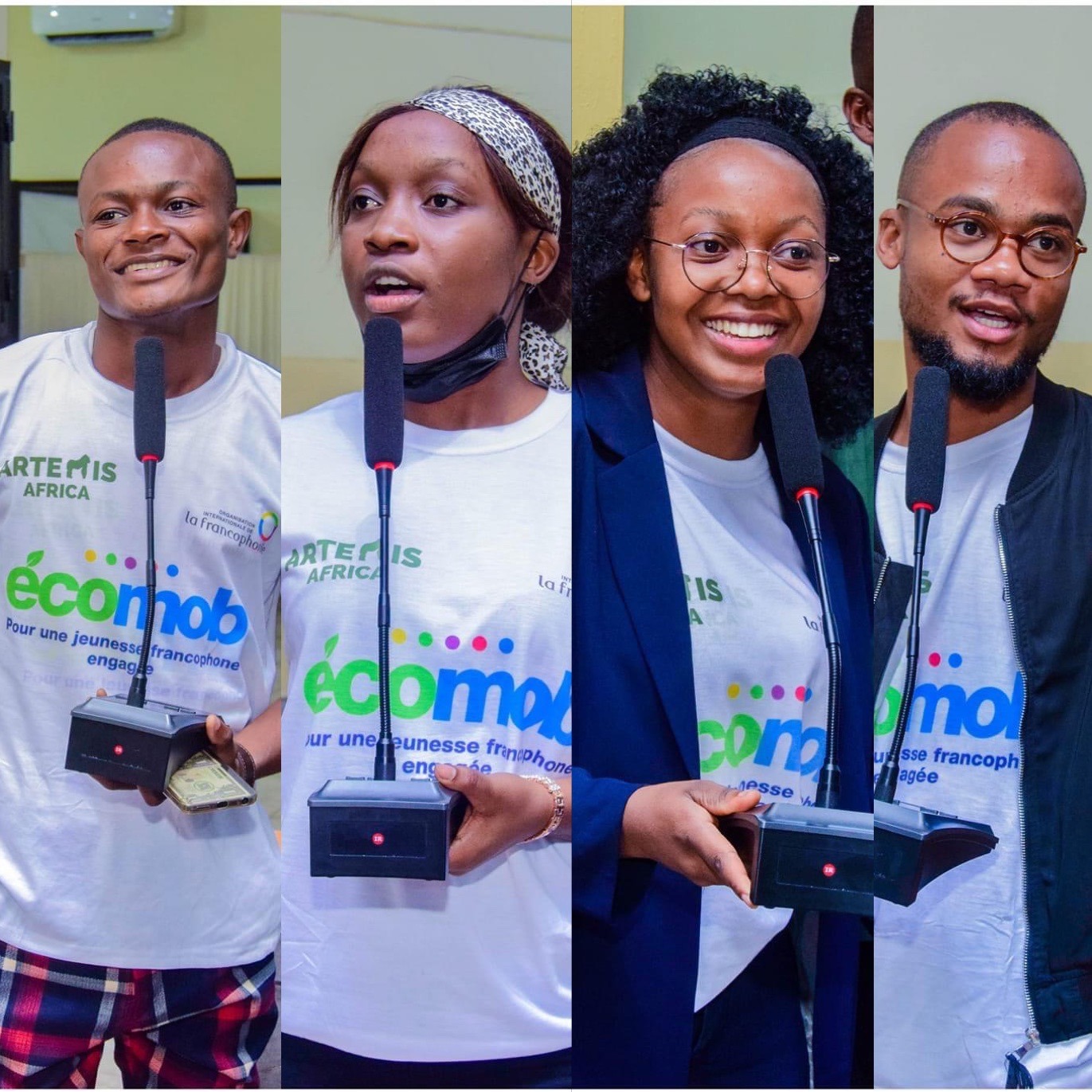
Implemented in 2023 in partnership with the International Organization of La Francophonie (OIF), the Ecomob project demonstrated the transformative power of youth engagement in combating urban pollution and promoting sustainable development in Kinshasa, the capital of the Democratic Republic of Congo.
Mobilization and Action: The project successfully mobilized over 100 young people around concrete activities of collection, sorting, and valorization of plastic, metal, and organic waste. This civic mobilization enabled the collection of over 400 kg of waste, directly contributing to the cleaning of targeted neighborhoods in Kinshasa and the reduction of environmental pollution.
Large-Scale Awareness: Beyond field activities, the project deployed a mass awareness campaign using traditional media (radio) and social networks, reaching up to 6 million people. This communication strategy amplified the project’s impact and created collective awareness about the urgent need for sustainable urban waste management.
Innovative Solutions Developed: Participating youth co-developed and tested several concrete solutions: vermicomposting units to transform organic waste into natural fertilizer, vertical gardens for urban greening and food production in limited spaces, recycled objects that valorize plastic and metal waste, and improved stoves to reduce fuel consumption.
Socio-Economic Impact: The Ecomob project created socio-economic opportunities for participating youth, while contributing to urban climate action, reducing greenhouse gas emissions, and strengthening green entrepreneurship. The International Organization of La Francophonie praised the project’s impressive results, emphasizing that “collectively, we are capable of creating significant impact” in the fight against pollution and for sustainable development.